Step 1
Clear And Assess The Surface
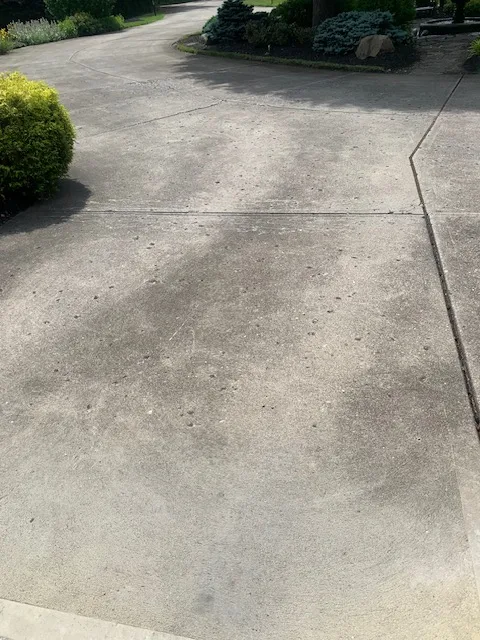
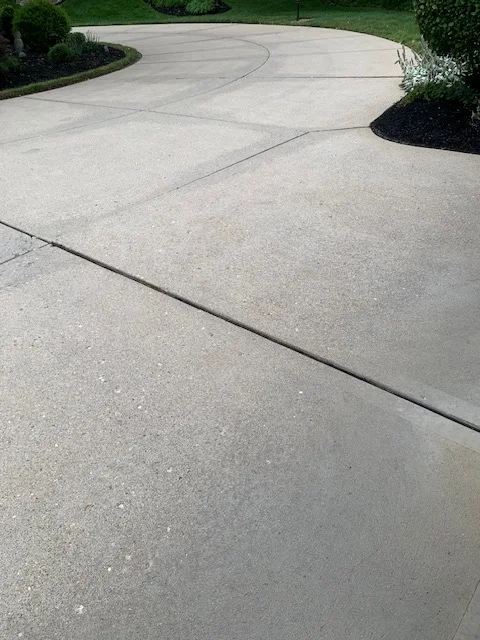
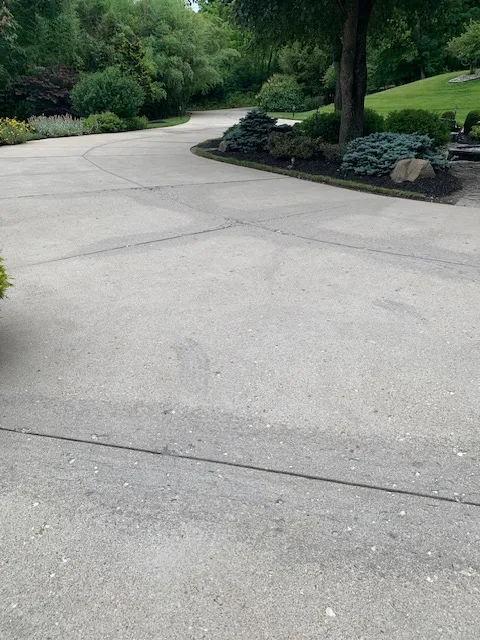
We clear the drive, look at the staining you actually have, and identify oil spots, tannin marks, and any cracking or spalling worth knowing about.
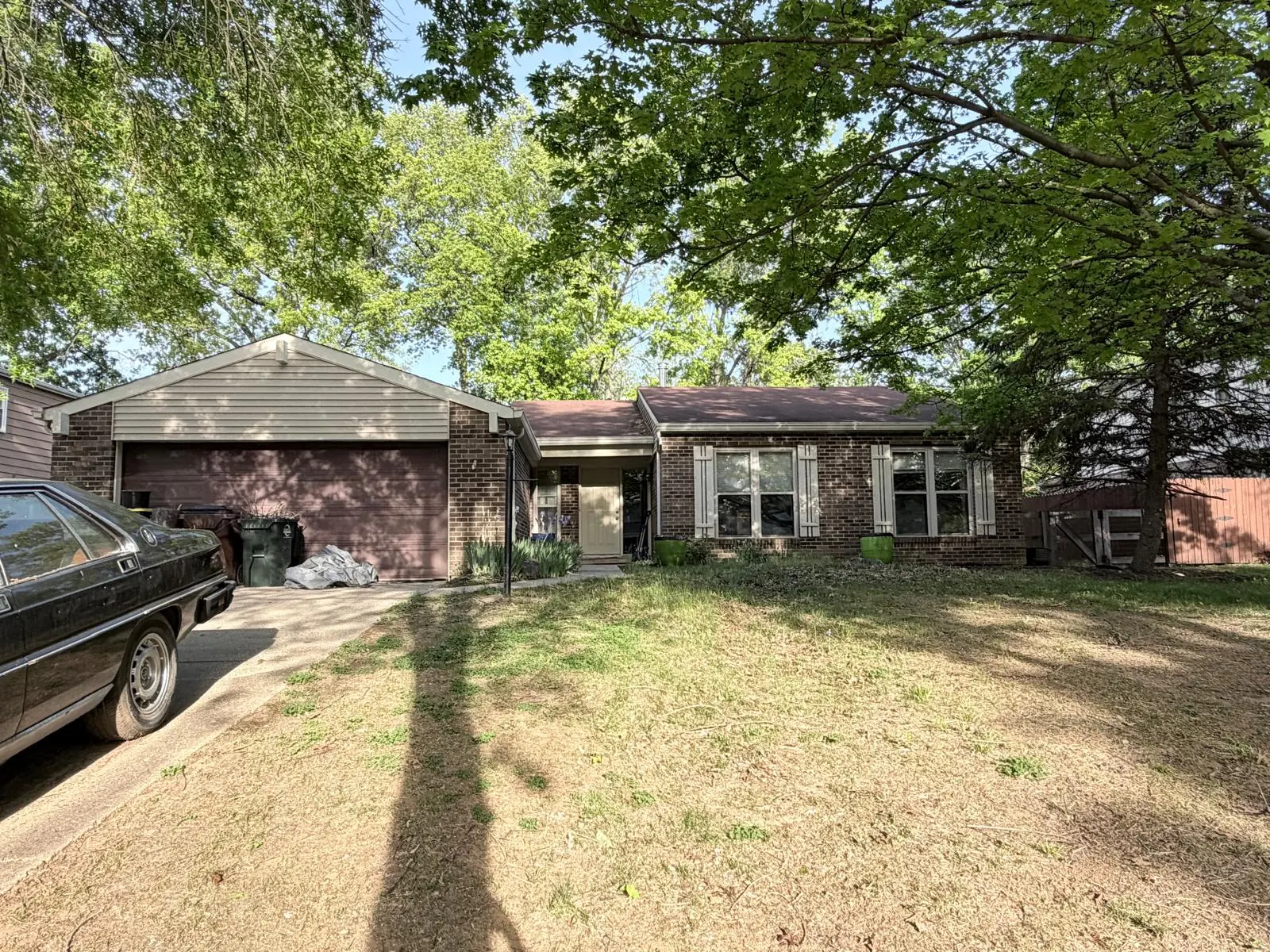
Mid-century Blue Ash homes came with generous concrete: long drives, deep aprons, and wide parking pads. That is a lot of surface going grey and green under sixty-year-old trees.
Learn More About This ServiceHomes built here in the 1950s and 1960s were laid out for cars, and the concrete reflects it. Driveways run long to detached and side-entry garages, aprons are deep, and many properties have an extra parking pad or turnaround. All of that concrete ages at the same rate and it all darkens together, which is why a partially cleaned driveway looks worse than one left alone.
The canopy overhead drives most of the staining. Leaf litter and organic debris sitting on concrete through a wet fall leaves dark tannin marks, branch drip lines show as long stripes, and shaded sections of the drive grow a green film that gets slick. Add decades of oil spotting near the garage and you get the mottled grey that most Blue Ash drives settle into.
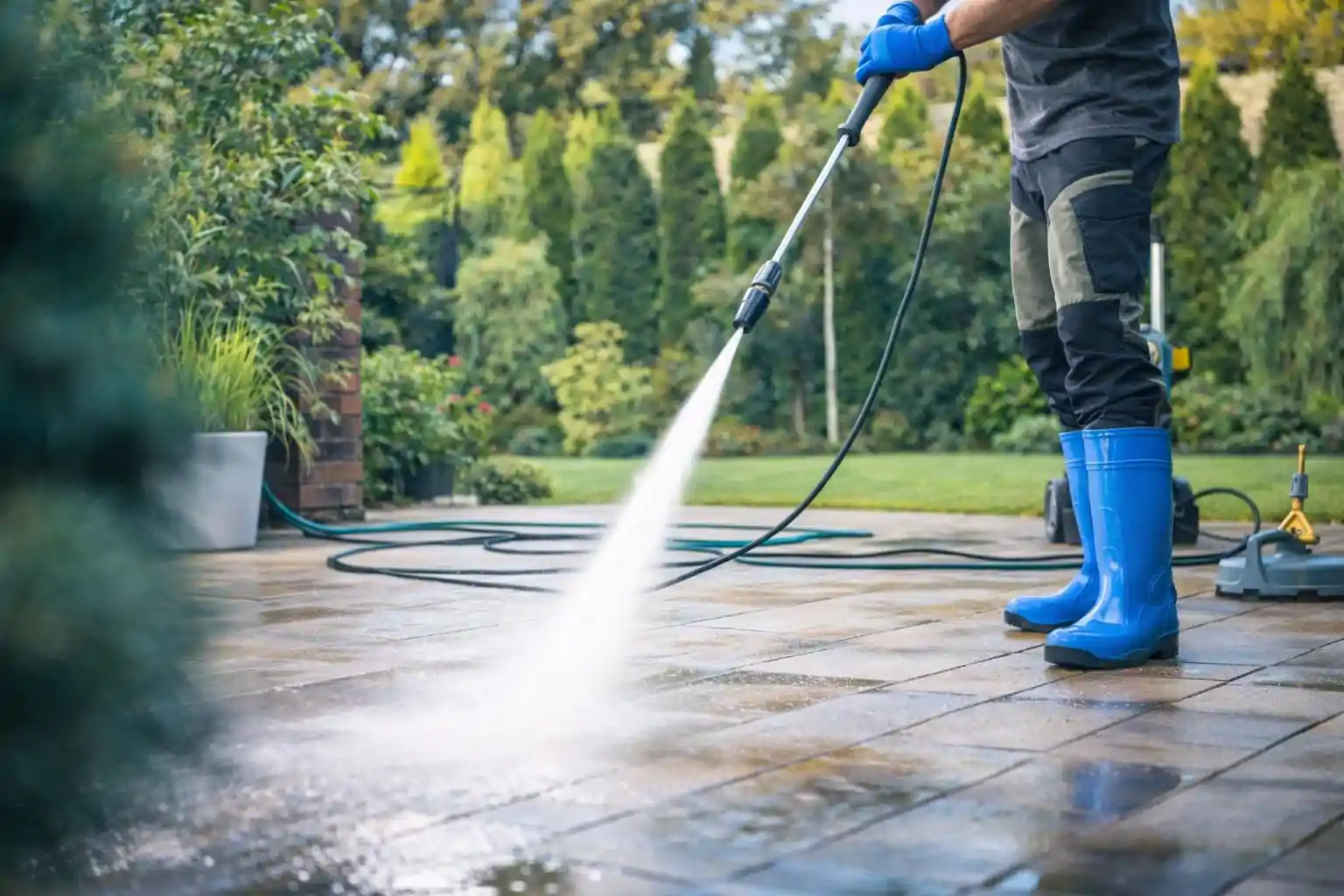
We clean the concrete with a surface cleaner rather than a wand, which is what produces an even result instead of the striped, zebra-marked finish that gives pressure washing a bad name. Oil spots and organic staining get pre-treated before the main pass.
A surface cleaner covers wide drives and aprons uniformly. Wand-cleaning a driveway this size is what leaves the striped look homeowners regret.
The dark marks left by leaf litter and branch drip lines under mature trees respond well to pre-treatment and a proper wash.
The green film that forms on the shaded stretch of a driveway is genuinely slick when wet. Removing it is a safety improvement, not just a cosmetic one.
Sealer belongs on clean concrete. Cleaning first is what makes sealing worth doing, and the two together hold far longer than either alone.
Step 1
We clear the drive, look at the staining you actually have, and identify oil spots, tannin marks, and any cracking or spalling worth knowing about.
Step 2
Oil spotting, organic staining, and the green film on shaded sections are treated before the main cleaning pass so they release properly.
Step 3
A rotary surface cleaner is run across the full drive, apron, and any pads for an even finish edge to edge.
Step 4
Edges, expansion joints, and borders are detailed by hand, then the whole area is rinsed down and inspected with you.
My driveway has dark patches under the trees. Will they come out?
Usually most of the way. Tannin staining from leaf litter responds well to pre-treatment. Very old staining that has sat for many seasons may lighten substantially rather than disappear, and we will tell you which you are looking at before we start.
Can you get old oil stains out of the apron?
We pre-treat them and lift a good deal of most oil spotting. Oil that has soaked deep into porous concrete over years will fade rather than vanish. Sealing afterward keeps new spills from setting the same way.
Why does my driveway look striped after a previous cleaning?
That is wand-cleaning. A pressure wand cleans in overlapping arcs that show as stripes on wide concrete. We use a rotary surface cleaner, which is what gives an even result across a driveway this size.
Should I seal the driveway after cleaning it?
It is worth considering, especially with mature trees overhead and road salt every winter. Sealing a freshly cleaned drive slows organic staining and salt damage. See our concrete sealing page for how that works.
We also offer driveway cleaning in nearby communities. Choose another area below.

"I am happy to recommend Clear Exterior. Jason was prompt in communication, reasonable in price and the before and after pictures tell the story. While I hope not to have as much dirt and moss on my walkway and roof, I will be calling Jason."

"Jason did a great job. He and his wife work well together. During the walk around, he offered to redo a few areas where the dirt was not removed completely to ensure that I was satisfied. Good luck, Jason and Clear Exterior! Wishing you a successful future!"

"Jason did great work on our home's driveway and front walkway. I didn't even notice just how dark some spots had gotten, especially our front steps, until he pressure washed them. I was amazed at the before and after! They look so much better now!"
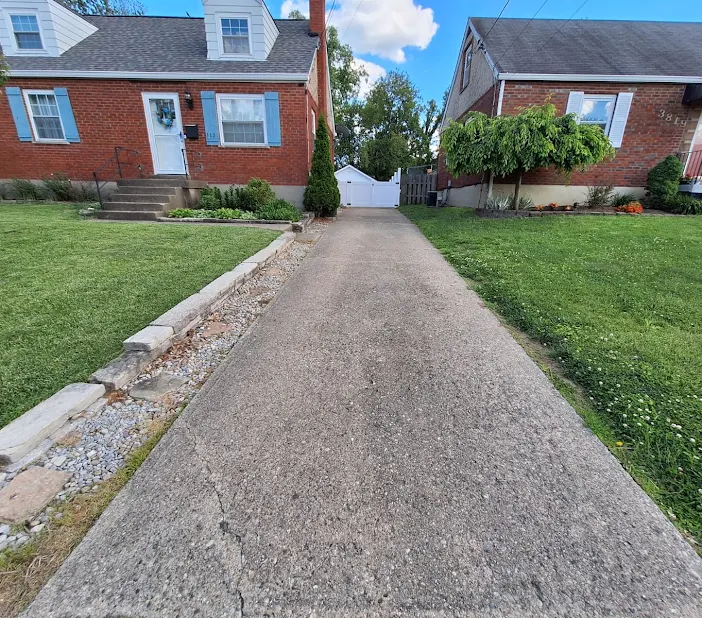
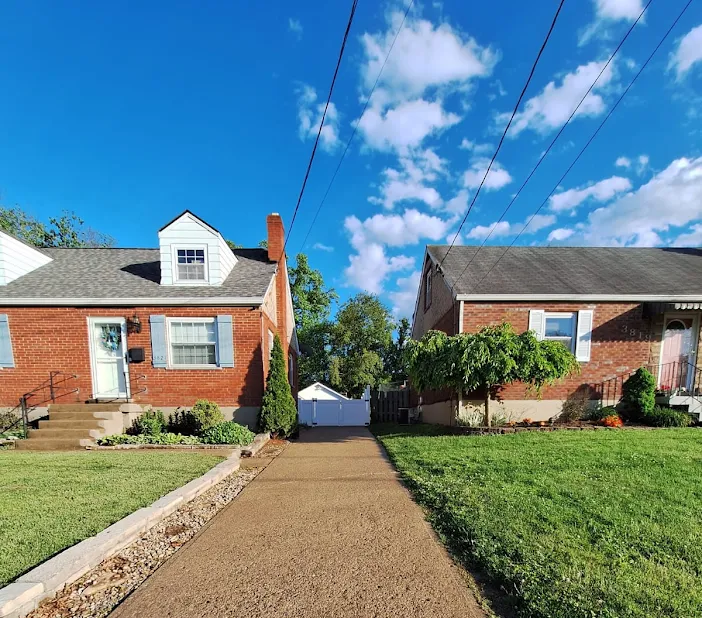

"Jason replied promptly with a competitive estimate immediately after I reached out to him. He was able to fit me in his schedule the next day. He did a great job cleaning the dirt and algae off my brick patio. I will reach out to him with future needs and highly recommend him."
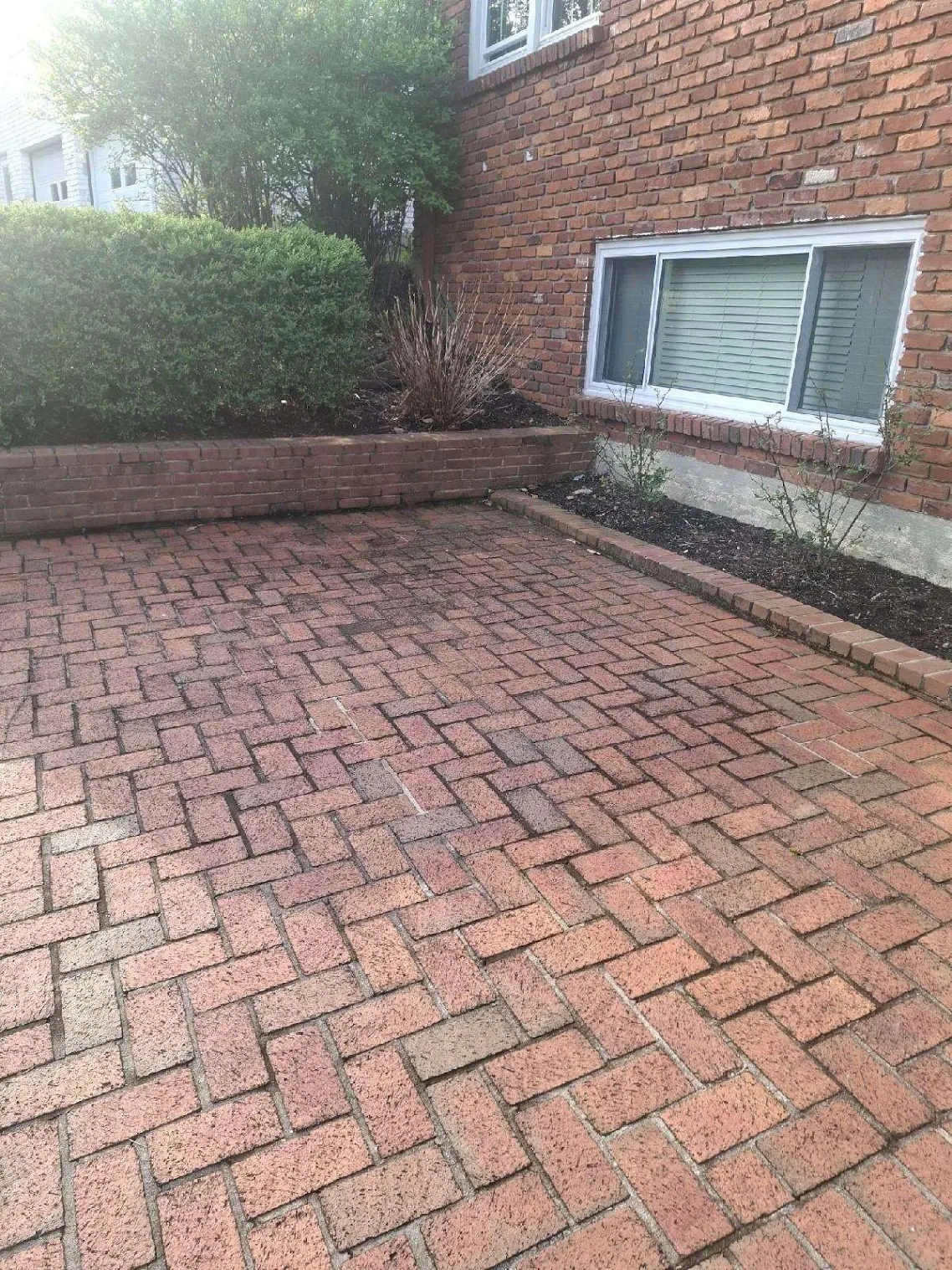
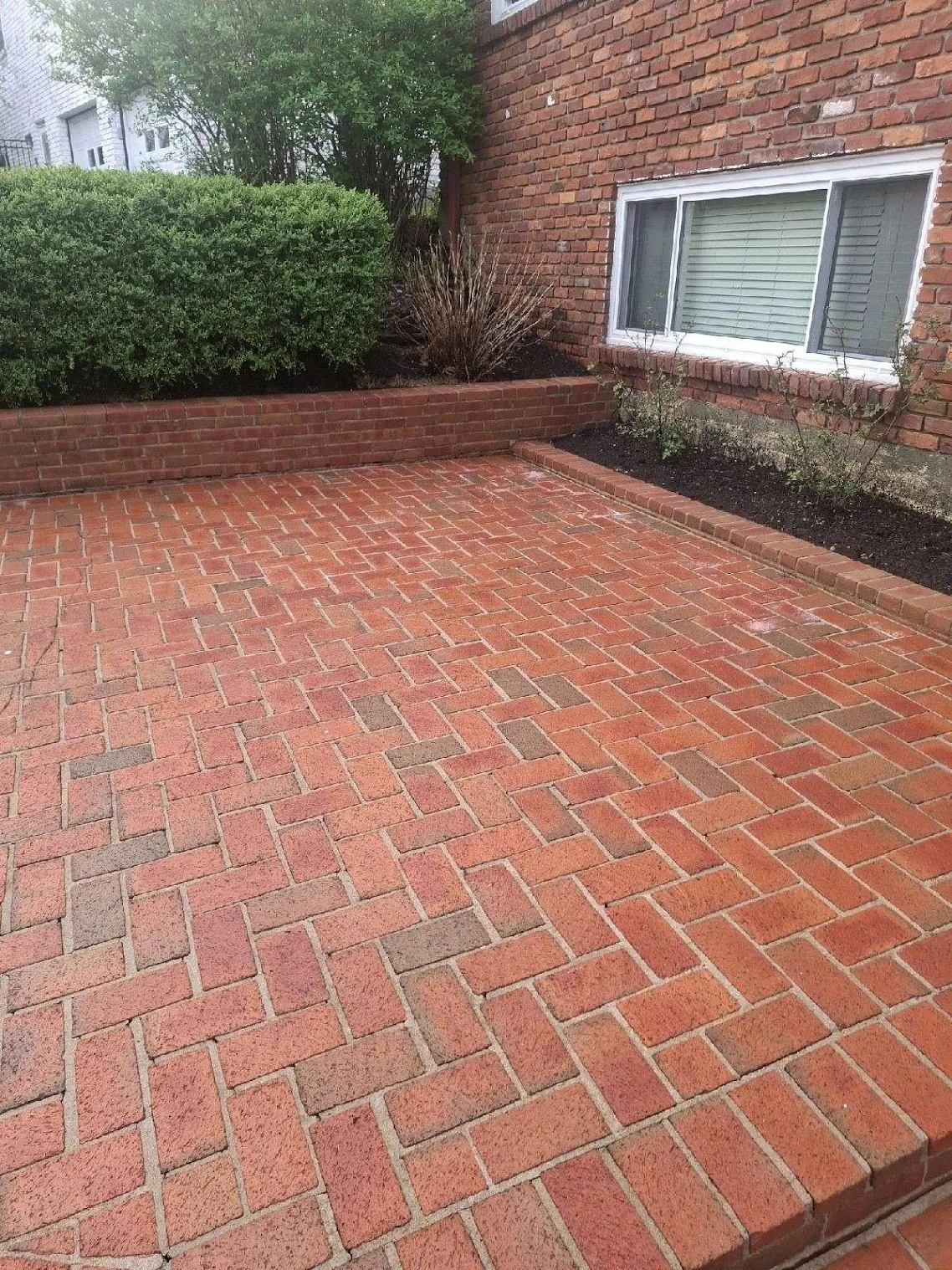

"Jason did a great job with the pressure washing of my house. He first contacted me about a month ago. (I think I had clicked Angi's List or something similar.) But anyway, when he first called me, I told him I work in taxation and would not have time to think about projects until after tax season was over, and to call me after April 17. And... unlike just about every other service provider - who would call me daily... Jason called me on April 18. And we went back and forth for a few days - mostly me asking questions... until we agreed he would pressure wash the house, patio, and driveway. And then he was available within that week! And stayed a bit longer to be sure everything was done right. Plus... he's the OWNER and started the business himself - not just someone who bought a franchise. (which is important to me - I like to support local business, even more so if it's an entrepreneur and not a franchisee.) And every time I pull into my driveway, I smile"

"We had a great experience with Jason at Clear Exterior! Scheduling was easy, and he did a thorough and professional job at an affordable price. He got our siding and our concrete looking fresh again. Highly recommended if you need some pressure washing done!"
We help homeowners across the Cincinnati area keep exterior surfaces clean, safe, and well maintained.
Service Area Map
Based in Cincinnati, we serve homeowners across Cincinnati and nearby communities.
West Chester
Liberty Township
Hyde Park
Pleasant Ridge
Sharonville
Milford
Batavia