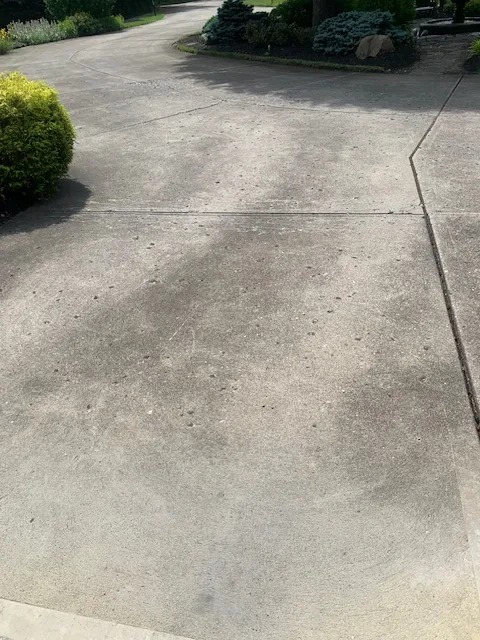
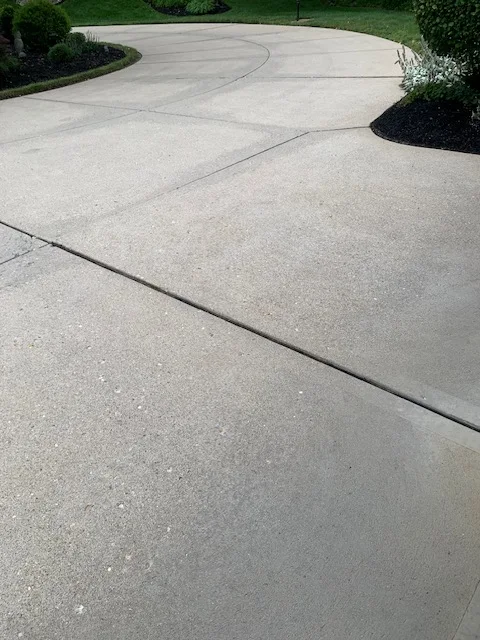
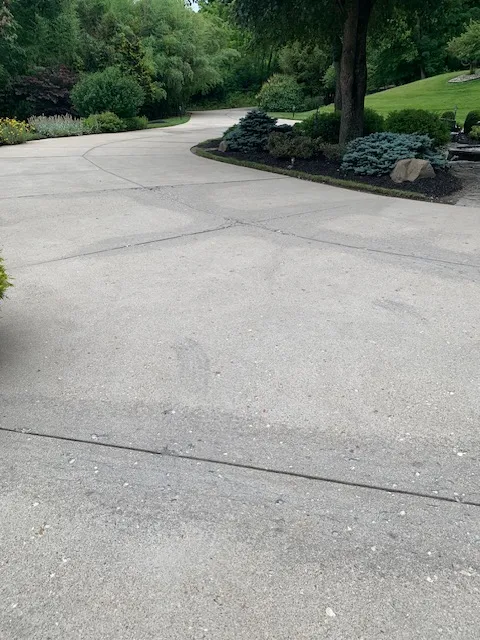
Step 1
Slab And Slope Check
 Step 1
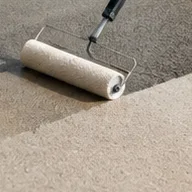
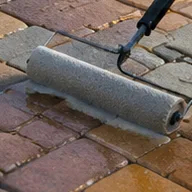
We identify the staining, check the slab for wear, and look at how water and runoff actually move across the drive.
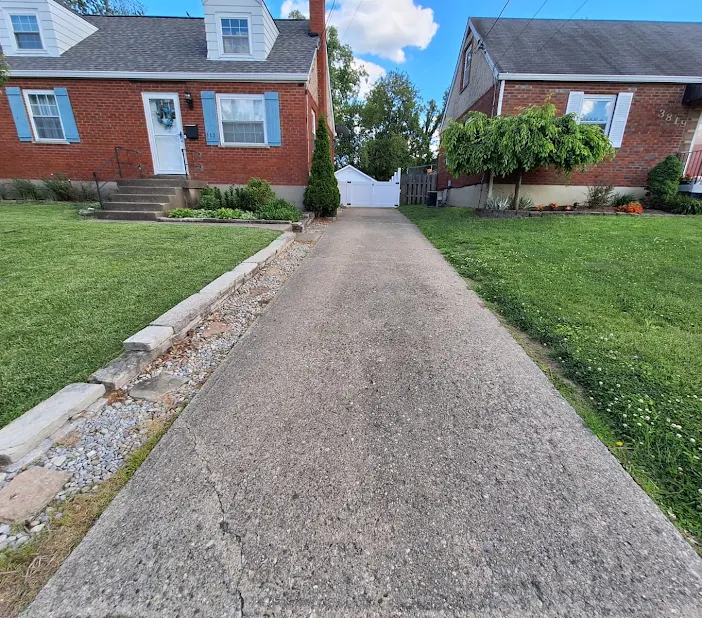
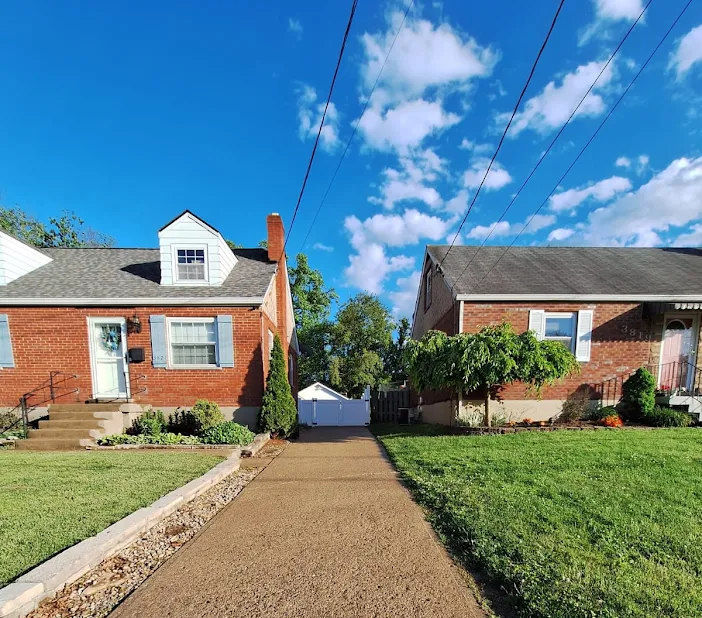
A sloped drive with an algae film on it is slick underfoot and worse under tires. This is a traction job before it is an appearance job.
Learn More About This ServiceWhat darkens concrete in Loveland is mostly organic. Wooded lots drop leaf litter that sits damp on the slab for weeks, tannin leaches out and drives a dark stain into the surface, and constant valley moisture supports a thin algae film across the whole thing. The result reads as a uniformly grey-green driveway rather than obvious spot staining, which is why people often assume the concrete has simply aged rather than that it is covered in something entirely removable.
On a sloped drive that film matters well beyond appearance. An algae layer on concrete is genuinely slippery wet, and a slope removes whatever margin you had. Walking down to the mailbox on a damp morning, or backing a car down in the rain, is a different proposition on a slab with a living film on it. On the shaded lower sections that stay wet longest, that is the most practical reason to get it done.
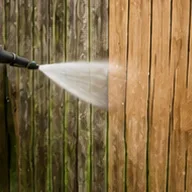
Surface cleaning is what produces an even result. A flat surface cleaner passes consistent pressure across the slab, where a bare wand leaves the overlapping arcs that show permanently once concrete dries. On a slope we also plan where runoff and the lifted organic material go, because on a hillside lot everything ends up somewhere downhill, and that somewhere is usually a patio or a planting bed you also care about.
The algae film is what makes shaded concrete slick, for people and for tires. Removing it is a practical safety improvement.
Surface cleaning passes uniform pressure across the slab, avoiding the wand arcs that show permanently once it dries.
On wooded valley lots the darkening is organic rather than dirt, and it gets pre-treated so it actually releases.
On a slope, rinse water and lifted debris travel. We plan where that goes so it is not deposited into your patio or beds.
Step 1
Step 1
We identify the staining, check the slab for wear, and look at how water and runoff actually move across the drive.
Step 2
 Step 2
Organic staining and algae are pre-treated so they release, and beds, hardscape, and drains below the drive are protected.
My driveway is slippery when it rains. Will cleaning fix that?
In most cases yes, because what makes shaded concrete slick is a living algae film rather than the concrete itself. Killing and removing it restores the surface texture. On a sloped drive it is the most common reason people book the work.
Why is my concrete green rather than just dirty?
Algae, growing on the constant moisture in the valley and thriving in the shade of a wooded lot. Pressure alone knocks it back briefly, so it needs a cleaning solution to kill it, otherwise it returns within weeks looking much the same.
Will cleaning wash debris down onto my patio?
Not if the job is planned properly. On a hillside lot we protect what is downhill and collect the lifted material rather than letting it run. It is a normal consideration on sloped Loveland properties rather than an afterthought.
How much does driveway cleaning cost in Loveland?
It follows the actual area and condition. Estimates are free. Sloped drives sometimes need more setup for runoff control, and the quote says so rather than surprising you afterward.
How long will it stay clean?
Less time than on an open lot, honestly. The trees keep dropping and the valley keeps the surface damp, so organic staining re-establishes over a couple of seasons. Sealing after cleaning is what meaningfully slows it down.
We also offer driveway cleaning in nearby communities. Choose another area below.

"I am happy to recommend Clear Exterior. Jason was prompt in communication, reasonable in price and the before and after pictures tell the story. While I hope not to have as much dirt and moss on my walkway and roof, I will be calling Jason."

"Jason did a great job. He and his wife work well together. During the walk around, he offered to redo a few areas where the dirt was not removed completely to ensure that I was satisfied. Good luck, Jason and Clear Exterior! Wishing you a successful future!"

"Jason did great work on our home's driveway and front walkway. I didn't even notice just how dark some spots had gotten, especially our front steps, until he pressure washed them. I was amazed at the before and after! They look so much better now!"

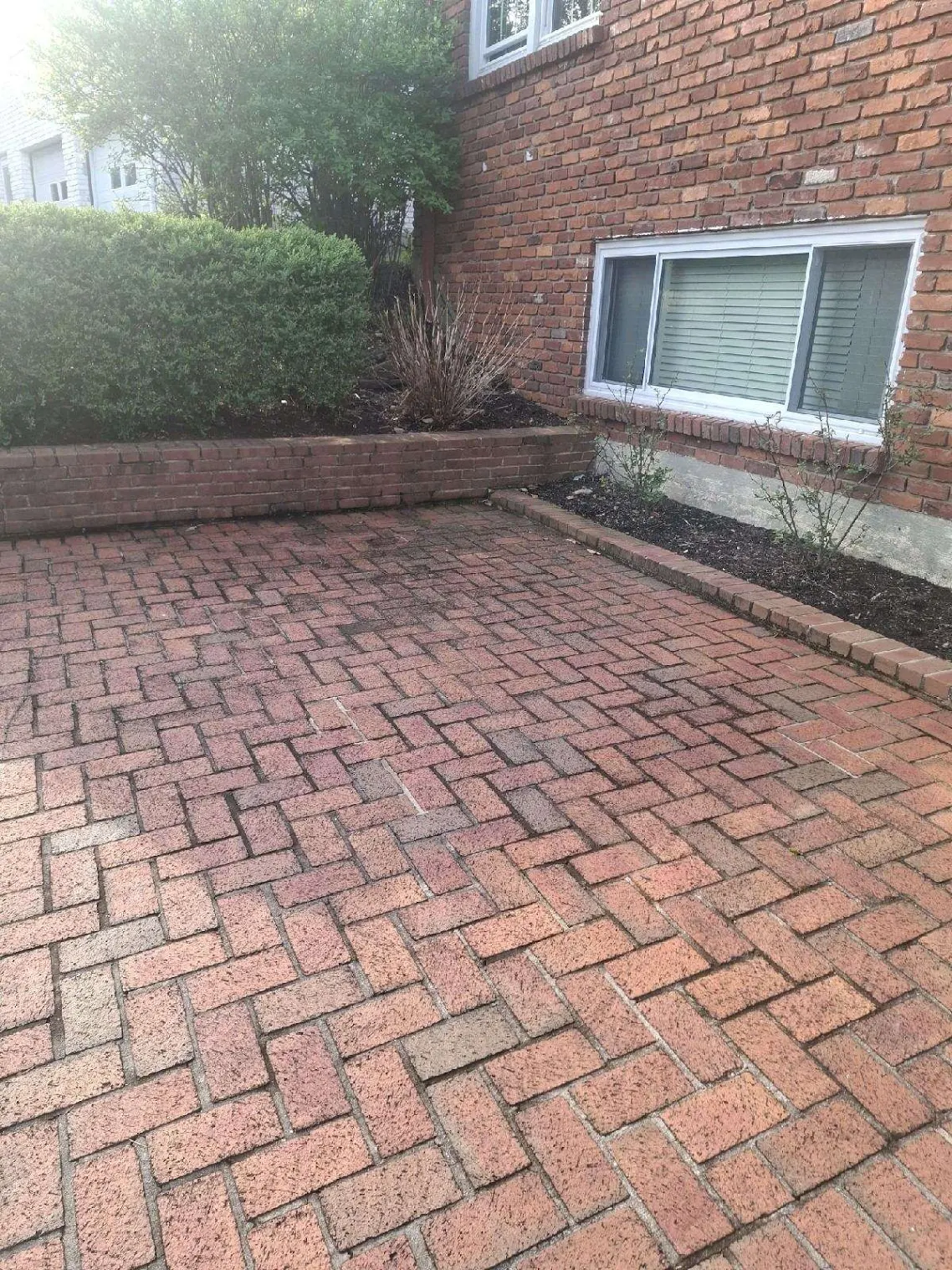
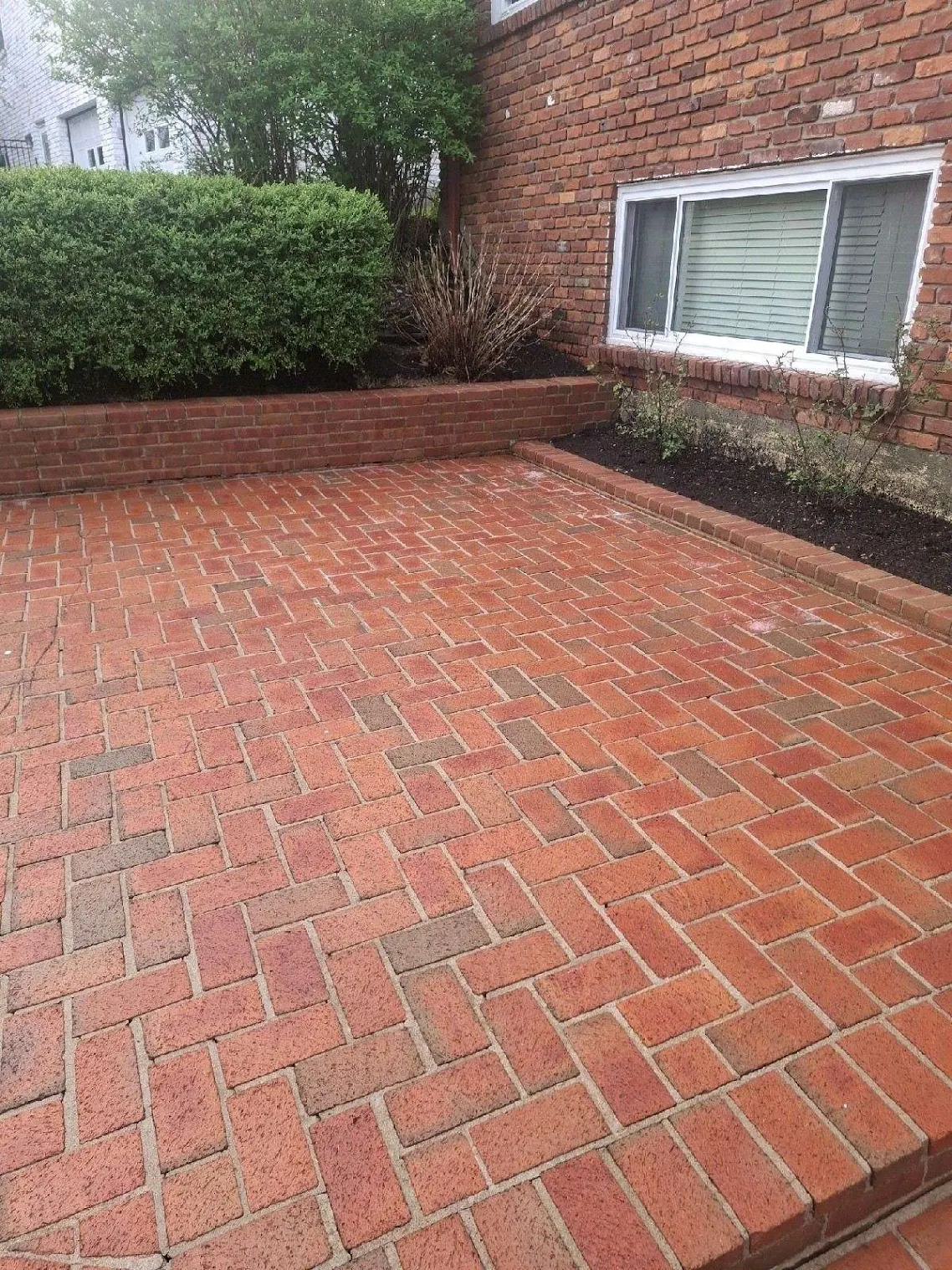
"Jason replied promptly with a competitive estimate immediately after I reached out to him. He was able to fit me in his schedule the next day. He did a great job cleaning the dirt and algae off my brick patio. I will reach out to him with future needs and highly recommend him."

"Jason did a great job with the pressure washing of my house. He first contacted me about a month ago. (I think I had clicked Angi's List or something similar.) But anyway, when he first called me, I told him I work in taxation and would not have time to think about projects until after tax season was over, and to call me after April 17. And... unlike just about every other service provider - who would call me daily... Jason called me on April 18. And we went back and forth for a few days - mostly me asking questions... until we agreed he would pressure wash the house, patio, and driveway. And then he was available within that week! And stayed a bit longer to be sure everything was done right. Plus... he's the OWNER and started the business himself - not just someone who bought a franchise. (which is important to me - I like to support local business, even more so if it's an entrepreneur and not a franchisee.) And every time I pull into my driveway, I smile"

"We had a great experience with Jason at Clear Exterior! Scheduling was easy, and he did a thorough and professional job at an affordable price. He got our siding and our concrete looking fresh again. Highly recommended if you need some pressure washing done!"
We help homeowners across the Cincinnati area keep exterior surfaces clean, safe, and well maintained.
Service Area Map
Based in Cincinnati, we serve homeowners across Cincinnati and nearby communities.
West Chester
Liberty Township
Hyde Park
Pleasant Ridge
Sharonville
Milford
Batavia