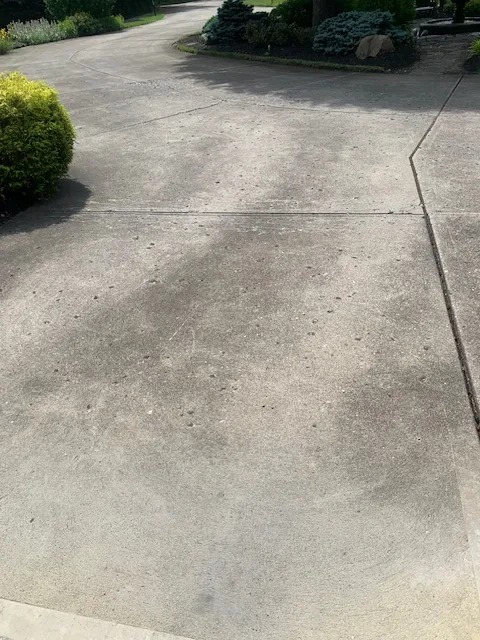
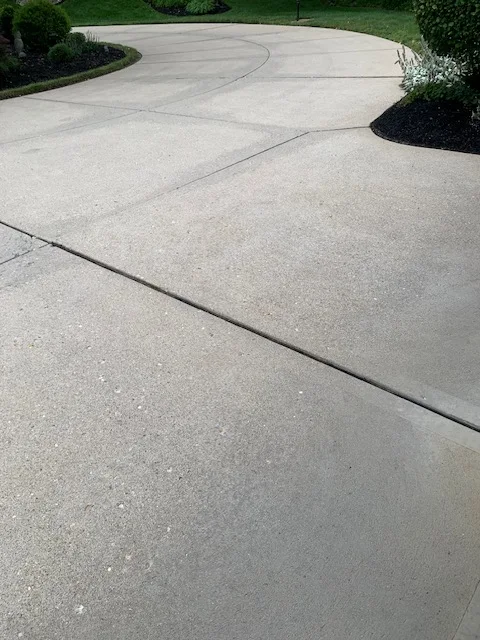
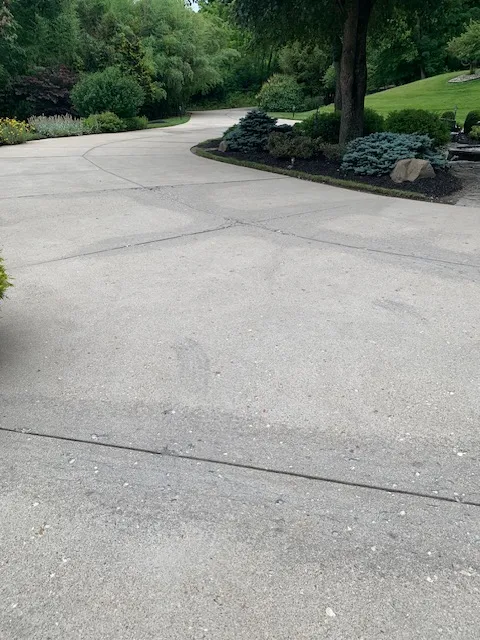
Step 1
Clean Pavers And Assess The Joints
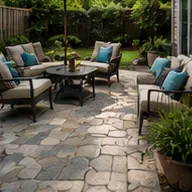
Stones are cleaned at paver-safe pressure, staining is pre-treated, and we check joint depth across the whole area before proceeding.
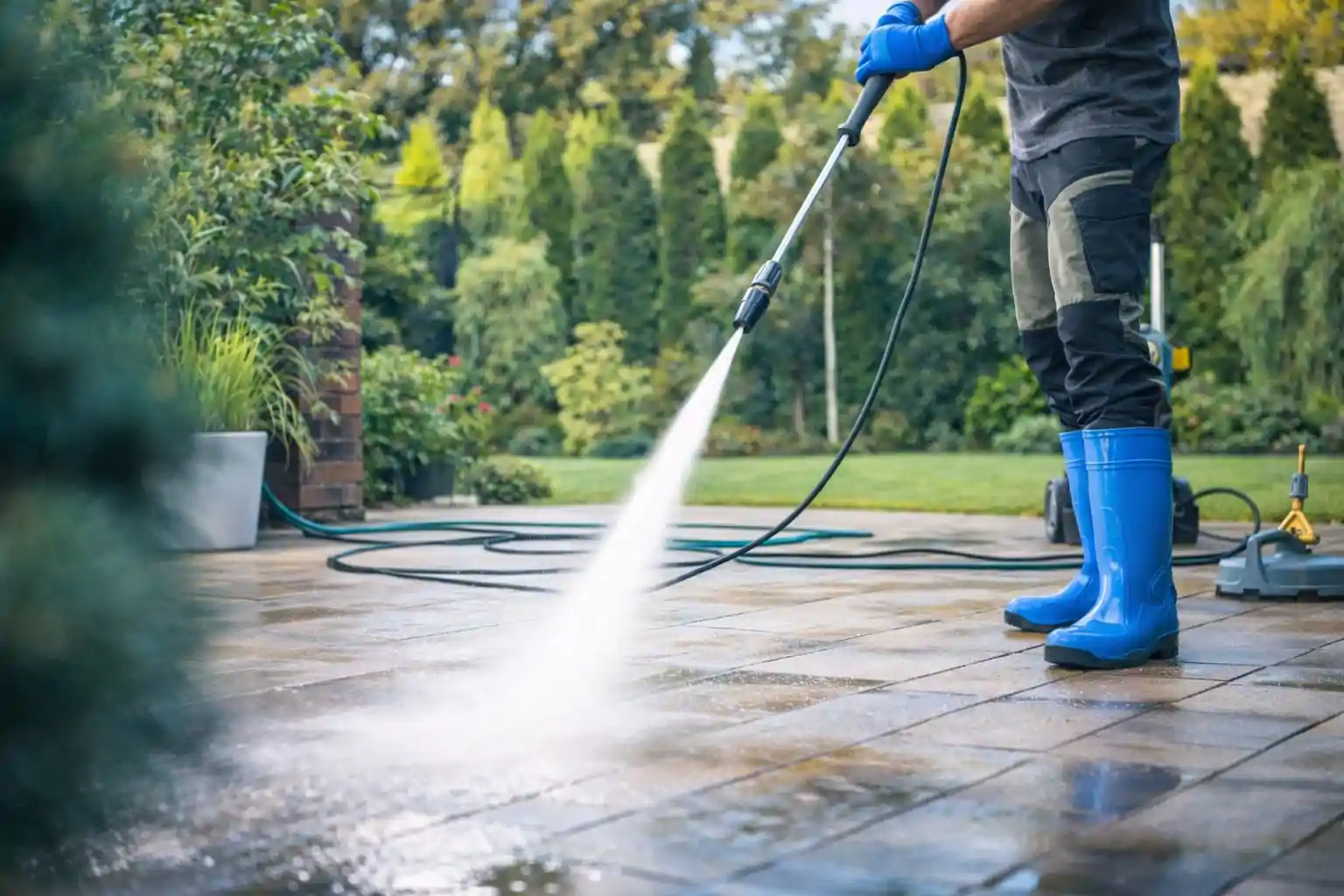
Pavers fail at the joints, not at the stone. Getting sand and sealer in while the patio is still young keeps it looking the way it did installed.
Learn More About This ServicePaver hardscape on Mason properties tends to be substantial and relatively recent. Large patios, seat walls, fire pit surrounds, front entries, and walkways were built as part of an outdoor living plan, and a good deal of it has been in the ground for years rather than decades. That timing is an advantage, because the right moment to stabilize and seal pavers is before the joints have fully washed out and before the stone has absorbed several seasons of grease and salt.
The failure mode is always the joints. Ordinary sand washes out gradually under rain, roof runoff, and routine cleaning, and once the joints empty the pavers lose the lateral support holding them against each other. What follows is predictable. Weeds and moss root in the open gaps, stones start to rock underfoot, the edges of the patio creep outward with nothing restraining them, and individual pavers settle low. Around a fire pit or seat wall an uneven paver is a trip point in a space people use after dark.
Sealing does a second job on a patio used the way Mason patios are used. Unsealed pavers are porous, so grill grease, spilled food and drink, fire pit soot, and winter salt soak into the face of the stone and become very difficult to remove. A sealed paver sheds all of it. Combined with polymeric sand, which binds when activated so it stays in the joint rather than washing straight back out, you get hardscape that stays both stable and clean rather than one or the other.
Full, bound joints hold stones against each other, preventing the rocking, creeping edges, and settling that follow empty joints.
On a patio with a grill and a fire pit, sealed pavers shed grease, soot, and spills instead of absorbing them into the stone.
Polymeric sand leaves seed and moss nothing to root in, which is what stops a newer patio going green between the stones.
On hardscape this age, sealing protects stone that has not yet stained. That is a much better position than trying to lift staining later.
Step 1
Stones are cleaned at paver-safe pressure, staining is pre-treated, and we check joint depth across the whole area before proceeding.
Step 2
Weeds, moss, and washed-out joint material are removed so new sand goes into a clean joint rather than on top of old debris.
Step 3
Polymeric sand is swept in and worked down so every joint is filled to depth rather than merely dusted across the surface.
Step 4
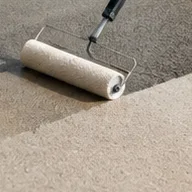
The sand is set, then a joint-stabilizing sealer is applied evenly, with coverage checked across the patio, walls, and edges.
My patio is only a few years old. Is it too soon to seal?
Generally not, and this is often the ideal time. Sealing protects stone that has not yet absorbed grease or salt staining. The pavers do need to have weathered a little first, so we check age and condition rather than applying a blanket rule.
Will sealing help with grill grease?
Considerably. Sealed pavers keep grease on the surface where it can be cleaned off, rather than letting it soak into porous stone where it becomes close to permanent. Around a grill or outdoor kitchen it is the main argument for sealing.
Do I need re-sanding if my joints still look full?
Possibly not. We check joint depth first, because joints often look full at the surface while being washed out below. If they genuinely are full then sealing alone may be all you need, and we will tell you that rather than selling both.
How much does paver sealing cost in Mason?
It follows the area and whether the joints need refilling, which is the bigger variable, and these patios are large. Estimates are free and include checking joint depth properly rather than eyeballing the surface.
How long before we can use the patio again?
The sealer needs curing time and we will give you a specific window when we finish. On an open Mason patio in full sun it is usually shorter than on a shaded one, but it is worth planning around if you have something booked.
We also offer paver sealing & re-sanding in nearby communities. Choose another area below.

"I am happy to recommend Clear Exterior. Jason was prompt in communication, reasonable in price and the before and after pictures tell the story. While I hope not to have as much dirt and moss on my walkway and roof, I will be calling Jason."

"Jason did a great job. He and his wife work well together. During the walk around, he offered to redo a few areas where the dirt was not removed completely to ensure that I was satisfied. Good luck, Jason and Clear Exterior! Wishing you a successful future!"

"Jason did great work on our home's driveway and front walkway. I didn't even notice just how dark some spots had gotten, especially our front steps, until he pressure washed them. I was amazed at the before and after! They look so much better now!"
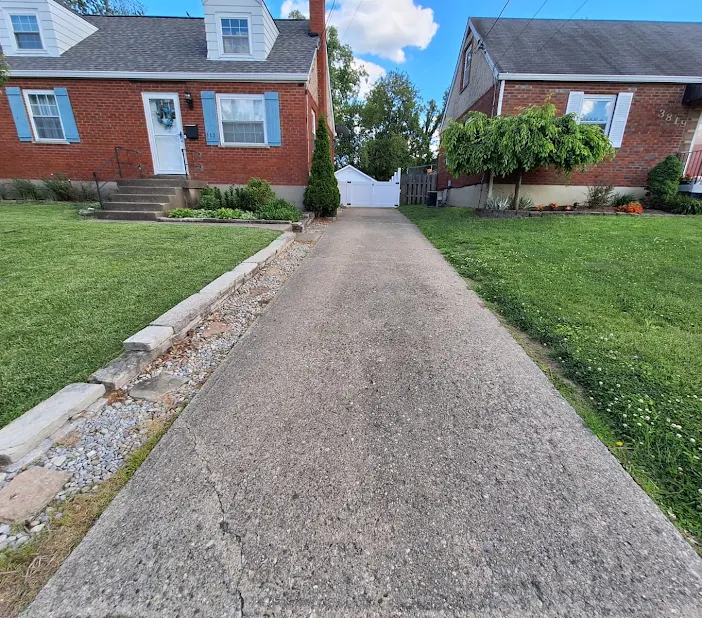
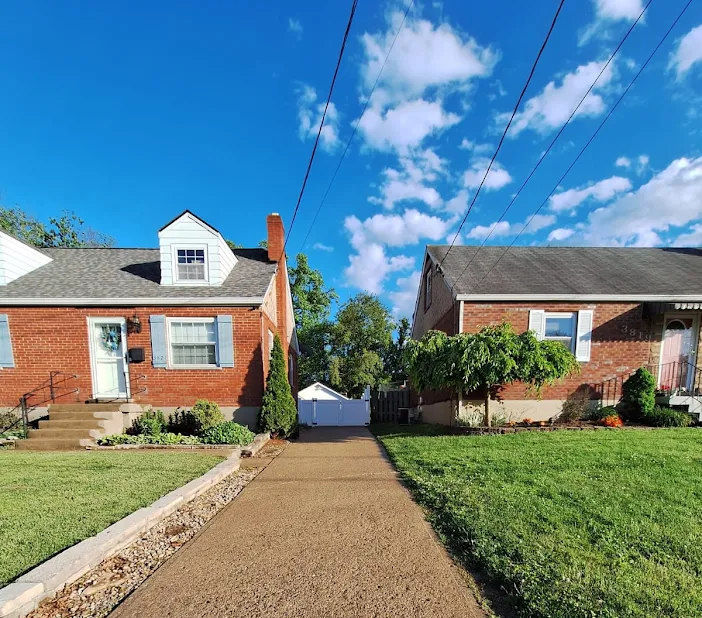

"Jason replied promptly with a competitive estimate immediately after I reached out to him. He was able to fit me in his schedule the next day. He did a great job cleaning the dirt and algae off my brick patio. I will reach out to him with future needs and highly recommend him."
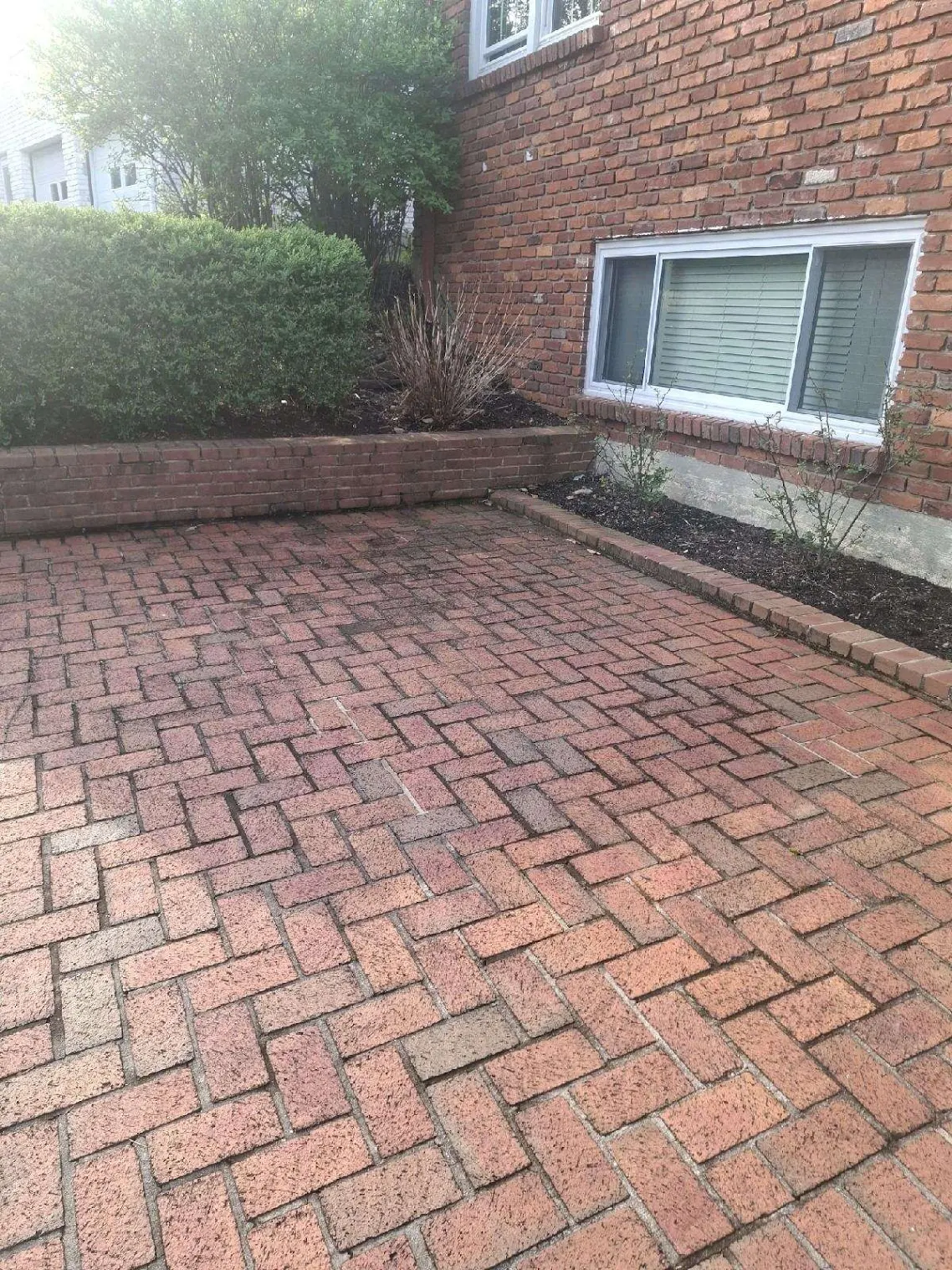
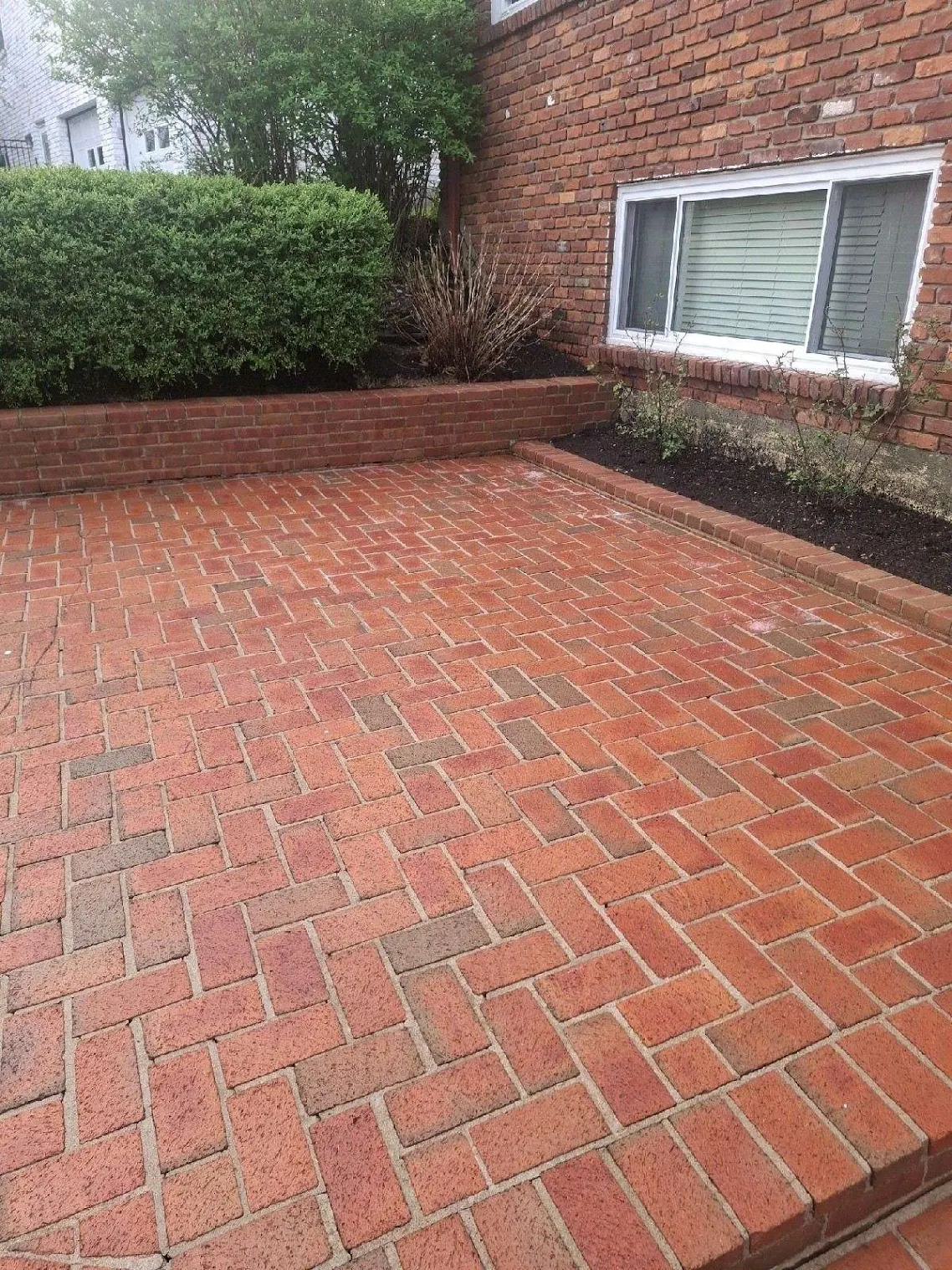

"Jason did a great job with the pressure washing of my house. He first contacted me about a month ago. (I think I had clicked Angi's List or something similar.) But anyway, when he first called me, I told him I work in taxation and would not have time to think about projects until after tax season was over, and to call me after April 17. And... unlike just about every other service provider - who would call me daily... Jason called me on April 18. And we went back and forth for a few days - mostly me asking questions... until we agreed he would pressure wash the house, patio, and driveway. And then he was available within that week! And stayed a bit longer to be sure everything was done right. Plus... he's the OWNER and started the business himself - not just someone who bought a franchise. (which is important to me - I like to support local business, even more so if it's an entrepreneur and not a franchisee.) And every time I pull into my driveway, I smile"

"We had a great experience with Jason at Clear Exterior! Scheduling was easy, and he did a thorough and professional job at an affordable price. He got our siding and our concrete looking fresh again. Highly recommended if you need some pressure washing done!"
We help homeowners across the Cincinnati area keep exterior surfaces clean, safe, and well maintained.
Service Area Map
Based in Cincinnati, we serve homeowners across Cincinnati and nearby communities.
West Chester
Liberty Township
Hyde Park
Pleasant Ridge
Sharonville
Milford
Batavia